VALORANT Champions Shanghai Group Stage Explained
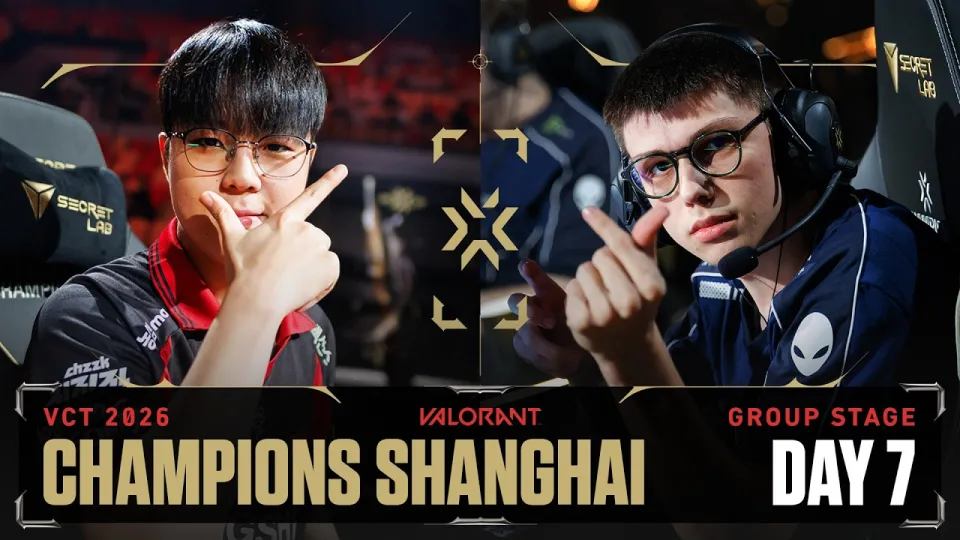
Video: VALORANT Champions Shanghai — Group Stage — Day 7
Need articles like this for your video? They help promote it on YouTube and Google — order them in the Telegram bot @sat_sit_bot. Articles with your video embedded are written and posted by the bot itself — on popular topical sites (no ads). Your first 50 articles are free.
· based on the channel VALORANT Champions Tour
VALORANT Champions Shanghai is the final international event of the 2026 VCT season, where sixteen teams from Americas, CN, EMEA and Pacific play for the world title between September 24 and October 18. Group Stage Day 7 is the seventh broadcast day of that opening phase, streamed on the VALORANT Champions Tour channel, and it shows how the Swiss-style group format shapes the bracket before playoffs. Official updates, brackets and announcements are posted through the VALORANT Esports account on X.
What the VALORANT Champions Shanghai format looks like
The tournament gathers sixteen squads, four from each of the four VCT regions, and the group stage is the filter that decides which of them reach the playoff bracket. Teams enter with seeding earned through their regional leagues and international results, so the group draw already carries consequences: a strong regional split can mean an easier opening opponent, while a weaker seed can mean an immediate match against a Masters-caliber roster.
Day 7 sits late enough in the group phase that the stakes are visible on the server. Matches on this broadcast day are not about learning the patch anymore; they are about survival. The schedule mixes elimination-risk series with placement-deciding ones, which is why the broadcast runs long and why production issues become part of the story.
- 16 teams total, split evenly across Americas, CN, EMEA and Pacific.
- Group stage runs inside a September 24 to October 18 event window.
- Only the strongest group records advance to the playoff bracket.
- Every series is played on the current competitive map pool and patch.
Why Day 7 matters more than earlier group days
By the seventh broadcast day, the group table has compressed. Teams that opened with a loss are playing with no margin, and teams that opened with two wins are protecting a seed that could give them a better playoff path. That changes how series are drafted: comfort picks come out earlier, map bans get more conservative, and coaches lean on set plays instead of experimentation.
It also changes how viewers should read the results. A 2-0 on Day 7 is not the same statement as a 2-0 on Day 1, because the opponent has already adapted to the meta and to the tournament's pacing. This is the point in the event where preparation depth separates rosters: teams with a wide map pool can force opponents into uncomfortable picks, while teams with a narrow pool get scouted and punished.
The 2026 storylines behind the Shanghai bracket
The 2026 season produced two different Masters champions, which is the single most important context for Shanghai. When two separate teams lift international trophies in the same year, the world championship becomes the tiebreaker, and every group-stage match carries extra weight because a third different winner would confirm that the era has genuinely shifted.
The event description frames it directly: familiar names, new contenders and a fearless generation of challengers. In practice that means veteran organizations with deep playoff experience are sharing the stage with younger rosters that qualified on the strength of a single strong split. Group stage is where that gap gets tested, because best-of-three series reward adaptation over a single explosive map.
Shanghai itself fits the theme. The city is presented as a place where history and the future sit side by side, and the broadcast leans into that framing with a production built around the scale of the event rather than a single headline rivalry.
Reading the Day 7 broadcast and its technical pauses
The most repeated reaction to the Day 7 stream was about downtime. Viewers counted an unusual number of technical pauses across the broadcast, and the chat filled with jokes about an endless series of them. For anyone watching the VOD rather than the live feed, that matters practically: the pauses stretch the runtime, so the match action is spread across a much longer video than the map count suggests.
A few habits make the VOD easier to follow:
- Use the timestamp comment pinned by the community to skip the pauses and jump straight to rounds.
- Treat long freezes as production or server issues, not as a signal about either team's form.
- Watch the economy of each half rather than isolated frags; group-stage series are usually decided by eco and bonus rounds.
- Note which team calls the first timeout, since that often reveals who is losing the read on the opponent's setup.
One moment that circulated widely came on Split, where a Yoru clone briefly looked like it was helping hold a site. It is a small clip, but it captures why Day 7 is worth watching even with the delays: utility misreads and split-second decisions decide rounds at this level.
Common criticisms of the CN representatives
The harshest comments under the broadcast targeted the Chinese teams. Viewers argued that the region's representatives lost rounds that should have been unlosable, including eco situations and 5v2 retakes, and that their utility usage looked predictable once set strategies broke down. Others went further and claimed stronger teams from other regions missed the event entirely.
That criticism deserves context. Losing to a saved-up eco or a shorthanded retake is usually a symptom of information failure rather than aim: a team commits utility early, gets read, and then has nothing left to stall a fast execute. On the other side, the same clips show opponents converting those windows with disciplined trades. Group stage amplifies both effects because teams have scouted each other's defaults across multiple days.
What the group stage actually measures is resilience. A roster that can reset after a lost eco, slow the pace down and force a full-buy round is the one that survives to playoffs. That is the standard to apply to every region in Shanghai, not just CN.
Players and names worth tracking
The broadcast's community reactions singled out individual pros alongside team results, which is normal for a tournament of this size. Star players on the big rosters draw the loudest reactions, and a single clutch on a retake can shift the narrative around a group. For viewers new to VCT, the practical approach is to follow two or three players per region and watch how their roles change between attack and defense halves.
Group stage also surfaces less familiar names. A rookie who posts a clean series on Day 7 can move from unknown to playoff storyline in a single map, and those performances are often what the highlight packages built from the VOD focus on.
Useful links
- VALORANT Esports on X for brackets, schedules and official announcements.
- VALORANT Esports on Facebook
- VALORANT Esports on Instagram
- VALORANT Esports on TikTok
- VALORANT on Twitch for live broadcasts.
Final takeaway
Group Stage Day 7 is the point where the VALORANT Champions Shanghai field stops being a list of sixteen teams and becomes a bracket with real consequences. The 2026 season already produced two Masters champions, so Shanghai is the event that decides which of them, or which challenger, owns the year. The Day 7 broadcast is worth watching for the economy battles and utility reads, even with the technical pauses stretching the runtime. This breakdown is based on the official broadcast published by the VALORANT Champions Tour, and following the official VALORANT Esports account on X is the fastest way to catch the playoff schedule and results as they are confirmed.
Key takeaways
- VALORANT Champions Shanghai runs September 24 to October 18 and crowns the 2026 world champion.
- Sixteen teams from Americas, CN, EMEA and Pacific compete for the biggest trophy of the year.
- Group Stage Day 7 is the seventh broadcast day of the opening phase, streamed by the VALORANT Champions Tour.
- Two different Masters champions in 2026 set up Shanghai as the year's deciding event.
- The Day 7 broadcast drew attention for repeated technical pauses and a Yoru clone misread on Split.
Source: VALORANT Champions Shanghai — Group Stage — Day 7 · Markdown version
Questions & answers
What is VALORANT Champions Shanghai?
It is the final international VALORANT event of the 2026 VCT season, running from September 24 to October 18. Sixteen teams from Americas, CN, EMEA and Pacific compete to become the 2026 world champion.
How does the group stage decide who advances?
The sixteen teams are split across the four regions and play through the group phase, with only the strongest records moving into the playoff bracket. Later group days carry more weight because a loss leaves little room to recover.
Why were there so many technical pauses on Day 7?
Viewers counted an unusual number of pauses during the broadcast, which stretched the runtime well beyond the map count. For VOD viewers, the practical fix is to use community timestamps to skip the downtime and go straight to rounds.
Is the CN region really weaker at this event?
Criticism focused on lost eco rounds and failed 5v2 retakes, which usually point to information and utility management rather than aim. Group stage punishes predictable setups, so the real test is whether a team can reset and force full-buy rounds after a setback.